

지속가능한 발전사례
Case study
http://www.sd-commission.org.uk
British Eco Rainwater:namespace prefix = 'o' />
Harvesting System
School Rainwater Harvesting
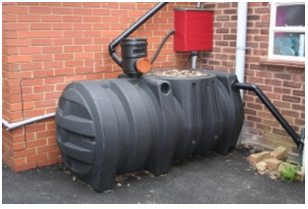
British Eco Rainwater Harvesting System
Contributed by:Helena Wright
Publication of any case study does not imply an endorsement of its merit by the Sustainable Development Commission.
Fulmer Infant School in Buckinghamshire decided to install a British Eco rainwater harvesting system to recycle rainwater to flush the toilets.
Overview
Fulmer Infant School in Buckinghamshire installed a rainwater system from British Eco in 2008. The rainwater tank collects the rain from the roof to flush the toilets, instead of using mains drinking water. It has contributed to the schools 'Eco School' Status as well as helping the school to save money on the water meter bills.
Mrs. Forster has found that the rainwater recycling system is great for educational purposes to help the children learn about sustainability and reusing water. It has helped with teaching the children to reuse things and not to waste them. The school already has an environmental ethos and makes its own compost, so recycling rainwater is just one of the areas. The rainwater harvesting system has been one of the major projects contributing to the schools efforts to become an 'Eco School'.
With a rainwater harvesting system, rain water from the roof is collected in the tank and filtered to take out any debris. Rain water can be used to flush the toilets, for washing clothes or on the garden. It will reduce the water bills, saving money as well as the environment. In a domestic setting, rainwater harvesting can reduce water consumption by up to 50% while in a commercial setting it can reduce up to 80% of water consumption.
In the UK, we are ideally suited to rainwater harvesting since the UK is the rainwater capital of the world. However many buildings still use drinking water from the mains to flush the toilets; which is wasting fresh drinking water - our most precious resource. There are other environmental benefits from rainwater harvesting since the tank lowers the risk of flooding. Moreover, you can use rainwater in a washing machine to wash clothes which requires less detergent than using hard tap water.
At Fulmer School, they are already looking at other eco improvements such as Solar Panels.
Key features
consumption
education
energy
waste initiatives
water
Key data
Completion Date: 07/11/2008
Project Team: British Eco
Cost: £3,000
Local Authority: Buckinghamshire
Client: Fulmer School
Being taken up by LA's around country (23 to date)., England
13 February 2009

Mapping school travel
Contributed by:Andrew Combes
Publication of any case study does not imply an endorsement of its merit by the Sustainable Development Commission.
Using School Census data to support schools, officers and members in setting realistic targets for reducing car use.
Overview
“School travel plans are only as good as the data on which they are developed. Data can be better used, as evidenced by the The School Travel Health Check” “Improved data enables better targeting of activity by schools or local authorities, enhanced monitoring and benchmarking”
Towards a schools carbon management plan
The Sustainable Development Commission & DCSF
“The School Travel Health Check is, in my opinion, an invaluable tool for all those interested in improving the health and wellbeing of children. It provides such crucial information that I don't see how we can do without it.
If we want to get rates of cycling and walking up to the levels of the best European communities we need to use this data to make sure our transport plans will make that happen. If we fail to take maximum advantage of this opportunity we may fail our children.”
Dr Gabriel Scally
Regional Director of Public Health for the South West
In essence I am taking elements from the annual School Census, Mode of Travel in particular and ‘crunching’ them to give a school level ‘You are here’ for travel to and from school (includes carbon and calorie stats).
None of it is rocket science, however, the clever stuff comes in the way it is undertaken and presented. By using a combination of high quality mapping / air photos and school friendly presentation of data we have come up with a pack of information that is accessible to pupils, schools, policy makers and elected members.
Better still, the School Travel Health Check approach is scaleable, financially sustainable and it works! A growing number of authorities are taking up this approach. As well as supporting School Travel Plans they are increasingly using the data as a foundation for their statutory Sustainable Modes of Travel to School Strategies.
Strengths? It works. Plus Having a very small core project team (me) it can maintain clarity of purpose – to support and facilitate the move away from car use for the journey to and from school.
Weakness? Very small core project team! The need to operate and fund on an authority by authority basis (and having a day job) limits the roll out. Thanks must be given to Dorset CC for supporting this work.
Enough of the waffle. Take a look at the folders on my Dorset viewfinder website. Start with School Travel Health Check, then School Census Spreadsheets. Follow that with Before you choose your school and then browse amongst the rest!
Key features
education
energy
health
land use
local government
policy/framework initiative
transport
Key data
Project Team: Andrew Combes, data processing by Knowledge Mappers
Cost: Processing = £1500 plus £10 per school plus 1 penny per pupil. Paper output = £25 per school
Local Authority: Dorset County Council
Client: Dorset County Council
Yes, YOU can be a superhero!
Junior Energy Agents


