

Energy Busters and Energy Futures, programmes for change in Norfolk Schools
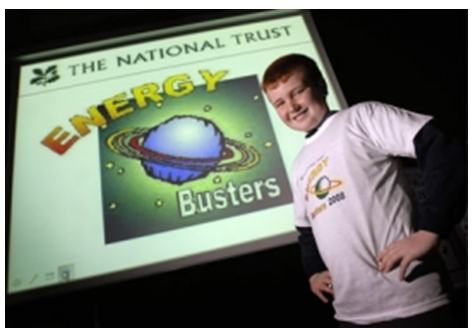
Energy Busters and Energy Futures, programmes for change in Norfolk Schools:namespace prefix = 'o' />
Young people share tactics with each other at a conference
atEcotech (Archant Photography Ltd)
Contributed by:Sustainable Development Commission
Organisation:We are a non-departmental public body
Energy Busters and Energy Futures, programmes for change in Norfolk Schools |
Norfolk, North East |
Publication of any case study does not imply an endorsement of its merit by the Sustainable Development Commission.
Over the last three years the Environmental and Outdoor Learning Team at Norfolk County Council, in partnership with the National Trust, have been running a scheme to raise awareness about energy and climate change in both primary (Energy Busters) and secondary schools (Energy Futures).
Overview
Over the last three years the Environmental and Outdoor Learning Team at Norfolk County Council, in partnership with the National Trust, have been running a scheme to raise awareness about energy and climate change in both primary (Energy Busters) and secondary schools (Energy Futures).
This scheme connects with key elements of the National Curriculum and applies energy management concepts in the real world of the school environment. The aim is to engage the whole school community in thinking about energy and climate change through the process.
The scheme has demonstrated extensive cost savings in the 50+ schools that have already been engaged, reducing their average energy costs by 20 per cent, and helping to save money that can be reinvested within the school. Some schools were able to save over 30 per cent of their energy use simply through behavioural and no-cost measures.
The value of this scheme was spotted by Norfolk County Council (NCC) when it embarked on the Local Authority Carbon Management Scheme (a partnership venture with the Carbon Trust) from May 2007 until March 2008. The ensuing baseline work energy use in the authority’s buildings not only revealed how extensive NCC’s emissions were, but showed that 71 per cent of the overall footprint could be attributed to schools. To put this in cost terms, a recent projection suggests that of a total buildings energy bill of £8.6m per year, around £6m is down to Norfolk’s 441 schools.
If the Energy Busters scheme expanded to cover all schools in Norfolk, it may be possible to achieve a reduction of 9,000 tonnes CO2 per year, with a cost saving in excess of £1m per year. The ‘Invest to Save’ argument is clear, and a case is currently being made to expand the scheme in this way, linked to an allocation from Norfolk Children’s Services capital budget.
Future work will focus on enabling schools to engage with their wider communities - to which they are central. For example, among the performance indicators included within Norfolk's Local Area Agreement is an area-based climate change reduction target (NI 186 within the National Indicator Set). Having schools showcase good practice on energy management, and wider action on carbon emissions, can help to build, inspire and motivate action in communities. Norfolk sees this as a critical factor in supporting community action on climate change, and a great way to tap into the interests of young people who are justifiably concerned about their future lives.
Key features
education
energy
Glebe School - 'Real Activities'
Contributed by:Rebecca Veitch
Organisation:Sustainable Development Commission
Glebe School - 'Real Activities' |
West Wickham, South East |
Publication of any case study does not imply an endorsement of its merit by the Sustainable Development Commission.
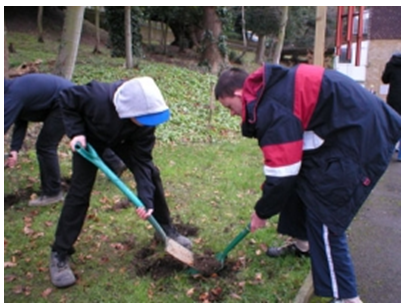
Glebe developed an area of its school grounds as a wildlife pond, outdoor classroom and walking trail. Its focus on ‘real activities’ in a practical setting was extremely successful at improving the motivation and performance of pupils.
Overview
Glebe is a special school serving 180 pupils aged between 11-16 with moderate learning difficulties. Its pupils come from both urban and rural settings in and around West Wickham. In 2003 Glebe developed an area of its school grounds as a wildlife pond, outdoor classroom and walking trail. The project involved school staff, parents and some of the school’s more disengaged pupils. Its focus on ‘real activities’ in a practical setting was so successful at improving the motivation and performance of pupils that it was expanded to include an organic fruit, vegetable and flower garden, which in turn became the Bromley Garden Project (BGP), a joint initiative involving three other local schools.
As the lead school in the BGP, Glebe uses its geography curriculum to ensure all pupils have the opportunity to work in the school grounds, choosing between mending fences, picking up litter, and tending crops in the garden. The school links this practical work to learning about issues such as organic production, food miles, and people’s habits as consumers.
While pupils can choose how they want to be involved in the garden, they must consider how that impacts on other pupils and partners. For example, if they are interested in weeding the garden, they must make sure tools are available and that their work will not disturb other classes. A collaborative approach is key to the success of the garden. It has also contributed to improved pupil behaviour and has provided a useful means of including pupils of different races, genders and abilities in shared endeavours.
The produce grown in the garden is used in the school tuck shop and sold at three local farmers’ markets. Pupils work with their partners in other BGP schools, ensuring that farmers’ market stalls are booked and transport is arranged. At the Bromley farmers’ market, the scheme has established bridges between pupils and farmers, stall holders, customers and market staff. Working in a real market has enabled pupils to focus on the needs of consumers, with the positive feedback of serving returning customers.
As one year 10 pupil recently said, “I really like working at the farmers’ market because we did all the work to get it ready and it was good seeing people buy our stuff.”
Glebe is now learning how to establish its garden as a long-running programme with stronger links to its curriculum. One opportunity has been provided by local residents who, because of their conversations with Glebe’s pupils, have found and offered a low-rent allotment for the school. This has provided pupils with further opportunities to learn about gardening and farming methods from members of the community.
As Martin Crabbe from Glebe School puts it,
“The Bromley Garden Project has provided a focus for real-world learning that has motivated students to become collaborative learners. It has helped them to develop self confidence and a realisation that they can contribute positively to their communities.”
Key features
biodiversity initiatives
education
regeneration
Key data
Project Team:
Local Authority:
Salmon Homecoming
A River Reborn
Contributed by:Claire Johnstone
Organisation:Environment Agency


